AI Agents vs. Traditional Chatbots in 2026: Why Back-Office Action Beats Front-End Chatter
Why most businesses don't need another talking bot on their homepage—they need quiet workflow agents that classify, prepare, and route real operational work.
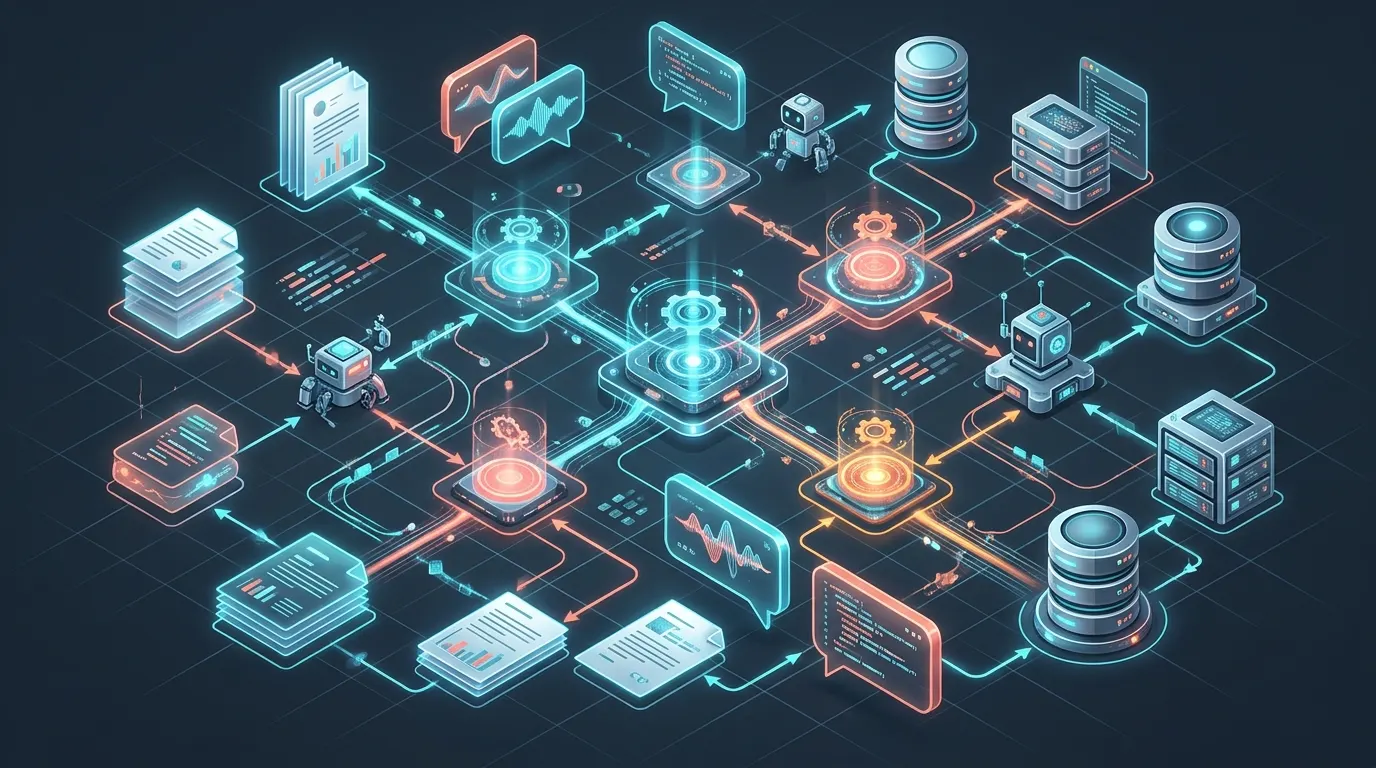
While traditional chatbots only match keyword trees in a chat window, 2026 AI workflow agents connect across your email, forms, spreadsheets, and CRM to classify requests, extract document fields, draft responses, and trigger alerts—operating under strict human-in-the-loop approval guardrails.
In practice across SMEs, logistics companies, professional service firms, clinics, and NGOs in Somalia and East Africa, focusing on back-office AI agents, multi-system orchestration, and human-guided execution ensures that technical investments translate into measurable commercial movement rather than isolated activity. Teams in Mogadishu, Hargeisa, and regional hubs can execute this step within their existing weekly rhythm and verify outcomes directly against pipeline and operational KPIs.
Look behind the chat window to where staff actually lose hours
When business owners hear ‘AI,’ they usually picture a public chat bubble on a website. Yet as we detail in Where AI Automation Creates Practical Value for Small Teams, the biggest drain on a 20-person company in Mogadishu is rarely answering the first ‘Hello’—it is the forty minutes of internal coordination that happens after a customer requests a quote, submits an invoice, or books a service.
Understand the difference: Rule Trees vs. Chatbots vs. Workflow Agents
A rule-tree bot forces users to press ‘1 for Sales, 2 for Support.’ A basic LLM chatbot answers text questions from a PDF. A human-guided AI & Workflow Automation agent reads an incoming inquiry, checks whether the client already exists in your CRM, extracts their requested service and scope, drafts a tailored response in your team’s inbox, and pings the assigned account manager on WhatsApp with an approval button.
Constrain every agent to a single, verifiable job description
Multi-purpose ‘do-everything’ agents fail in production because their instructions conflict. Build narrow, specialized micro-agents: one agent solely for lead triage and routing, one for vendor invoice extraction, and one for compiling the daily 6:00 PM management summary.
Enforce read/write separation and mandatory human sign-off
Allow your workflow agents to read from approved reference tables and write into staging or draft queues—never directly into final bank disbursements or irreversible client emails without a human clicking ‘Approve.’
Log every agent step in a transparent operational table
Every time an automation runs on your Websites & Software or cloud backend, log the input trigger, the extracted fields, the confidence score, and the human reviewer action so your team can audit performance anytime.
Start with a 30-day pilot on one high-frequency bottleneck
Pick a single workflow that happens at least ten times a day, measure how many minutes it takes manually, deploy the controlled agent, and verify the time saved before expanding.